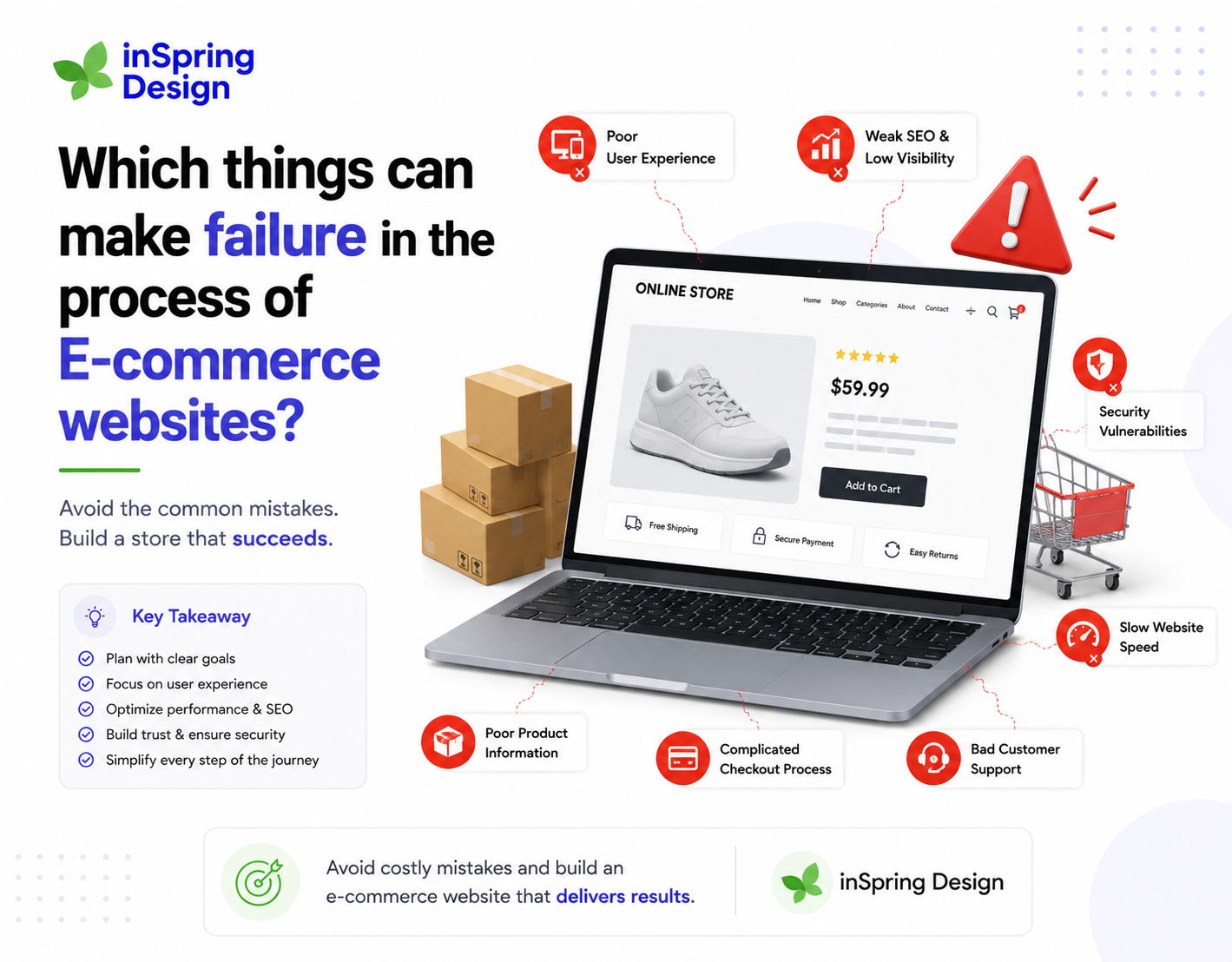




Building an e-commerce website is very different from creating a simple informational website. An online store needs to bring together design, product information, customer accounts, payments, databases, security, search visibility and a smooth purchasing experience.
A website can look attractive and still fail to generate sales if important parts of the experience are missing. Poor planning, complicated navigation, weak product content, technical limitations and an ineffective SEO strategy can all make it harder for customers to find the website, trust the business or complete a purchase.
The good news is that many of these problems can be identified before they become expensive mistakes. By understanding the requirements of an e-commerce website and planning the experience around the needs of its customers, businesses can create a stronger foundation for growth.
This article looks at the areas that can contribute to the failure of an e-commerce website and the considerations businesses should make when planning, designing and promoting an online store.
Key Takeaways
✓
E-commerce websites require more planning than simple informational websites because they often involve accounts, payments, databases and product management.
✓
Choosing hosting and technical infrastructure that match the website's requirements is important for reliability and security.
✓
Customers need clear navigation, useful product information and a straightforward experience when moving through the website.
✓
Payment systems and customer data require careful consideration because they are central to the purchasing process.
✓
Search engine visibility is essential for attracting potential customers who are looking for relevant products or services.
✓
Effective SEO requires more than adding keywords or H1 tags; content and audience search behaviour also need to be considered.
In This Article
E-commerce Success Starts With the Foundation
A successful online store needs more than attractive design. Every part of the digital experience needs to work together.
01Plan
Define products, customers, features and business requirements.
02Build
Create a reliable, secure and easy-to-use shopping experience.
03Optimize
Make the website accessible to search engines and potential customers.
04Grow
Use content, SEO and ongoing improvements to increase visibility.
1. Understanding the Requirements of an E-commerce Website
One of the first mistakes businesses can make is treating an e-commerce website like a simple brochure website. The technical and functional requirements can be considerably more complex when customers need to browse products, create accounts, submit information and complete transactions online.
A small personal website might only require a handful of pages, several images and a contact form. An e-commerce website, however, may need product catalogues, customer accounts, file or image uploads, shopping functionality, payment processing and a backend database for customer and order information.
Understanding these requirements before development begins helps determine the appropriate technology, hosting environment, database structure and third-party services. It also allows the website to be designed around the actual needs of the business instead of adding critical functionality later.
Professional web design should therefore begin with a clear understanding of what the website needs to accomplish. The more clearly those requirements are defined, the easier it becomes to plan a reliable and scalable solution.
2. Choosing the Right Hosting Environment
Hosting is an important part of the technical foundation of any website, but it becomes especially important when a website depends on databases, customer accounts, product information and online transactions.
A hosting environment needs to provide the resources and reliability required by the website. A small informational site may have modest requirements, while an online store with growing traffic, a large product catalogue and database-driven functionality can require a much stronger setup.
Businesses that do not want to manage hosting themselves can work with a web development provider that helps arrange an appropriate hosting account. Working with reputable hosting providers can provide an additional level of confidence around the reliability and security of the website infrastructure.
Choosing hosting purely because it is inexpensive can become a problem when the website grows. Hosting should be selected according to the application's technical requirements, expected traffic and future plans.
3. Creating a Simple and Useful User Experience
An e-commerce website needs to make it easy for visitors to understand what the business offers and find the products or services they are interested in. Complicated navigation, unclear information or an inconsistent interface can make the purchasing journey unnecessarily difficult.
Customers should be able to move logically from discovering a product to learning about it and taking the next step. Product categories, navigation, calls to action and important information should be organized around the way customers actually use the website.
The same principle applies to the overall design. A professional website should communicate trust and make important information easy to locate without overwhelming the visitor with unnecessary elements.
Good design is therefore not simply about making an e-commerce website look attractive. It is about creating an experience that helps customers understand, decide and act.
4. Payment Processing and Customer Data
Selling products or services online introduces requirements that do not exist on a basic informational website. If customers are expected to purchase directly through the website, payment processing and customer information need to be handled as part of the overall system design.
Third-party payment software may be required to process transactions, while a backend database may be needed to manage customer details, orders and other application data.
These integrations should be considered early rather than treated as an afterthought. The payment provider, customer account functionality and database requirements can all influence the architecture of the website.
Security and reliability are particularly important in this area. Customers need confidence that the website is trustworthy and that the purchasing process works correctly from beginning to end.
5. Search Engine Visibility Matters
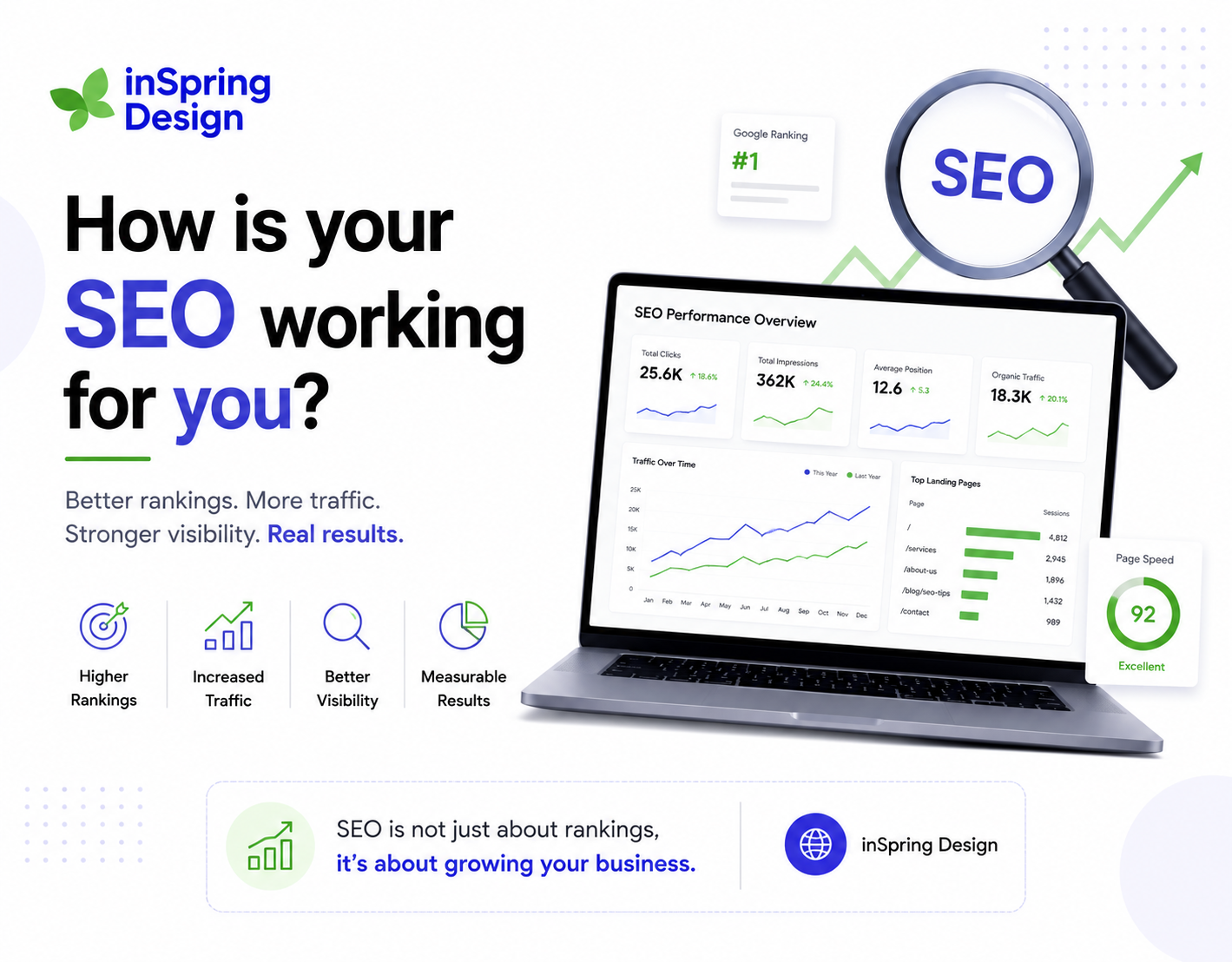
A well-designed e-commerce website still needs to be discovered. Search engines such as Google can be an important source of website traffic, particularly when potential customers are actively searching for products or services that a business offers.
Search Engine Optimisation, commonly known as SEO, is the process of improving a website so that search engines can better understand its content and users can discover it through relevant searches.
Higher visibility can help bring more qualified visitors to an e-commerce website. More importantly, the website needs to attract the right visitors rather than simply generating traffic that has no connection with the products or services being offered.
SEO should therefore be considered as part of the website strategy from the beginning rather than something added after the website has already been built.
6. Content and Keyword Strategy
One common misconception about SEO is that adding a few keywords or H1 tags is enough to improve search visibility. While page structure and relevant keywords have a role to play, effective SEO requires a much broader understanding of the website's content and audience.
The content should reflect what potential customers are actually looking for. Understanding the terms and phrases people are likely to use when searching for products or services can help businesses create more relevant pages and useful information.
Content should also be written for people first. Product descriptions, service pages and supporting articles should provide useful information rather than simply repeating keywords for the sake of search engines.
A more complete SEO strategy can combine content analysis, audience research, keyword research and technical improvements to help a website build sustainable search visibility over time.
Common Causes of E-commerce Website Failure
The following issues can create unnecessary barriers between an e-commerce business and its potential customers.
01
Poor Planning
Starting development without clearly defining the required features, customer journey and technical requirements can lead to expensive changes later.
02
Inadequate Hosting
A hosting environment that does not match the website's requirements can create reliability and performance problems as the business grows.
03
Complicated User Experience
Visitors may leave if products, information or the purchasing journey are difficult to understand or navigate.
04
Weak Payment and Data Planning
Payment integrations, customer accounts and databases need to be considered as core parts of the website rather than last-minute additions.
05
Ignoring SEO
An attractive online store can struggle to generate traffic if search engines and potential customers cannot easily discover it.
06
Over-Simplifying SEO
Adding a few keywords or heading tags alone is not a complete search strategy. Content and visitor search behaviour also need to be considered.
7. Plan for Long-Term Growth
An e-commerce website should not only satisfy today's requirements. It should also provide a foundation that can support the business as products, customers and traffic increase.
A business may start with a relatively small product range and later need additional categories, customer accounts, new payment options, marketing integrations or more advanced backend functionality. Planning for these possibilities can make future improvements easier.
This is where close collaboration between the business and development team becomes valuable. The development team can help translate business ideas into technical requirements, recommend practical approaches and identify opportunities before they become problems.
The goal is not to build unnecessary complexity from day one. It is to create a solid foundation that can evolve as the business grows.
What a Strong E-commerce Foundation Should Include
A successful online store brings several areas together into one consistent digital experience.
01
Clear Business Requirements
Define the products, services, customers, features and goals before development begins.
02
Reliable Technical Infrastructure
Choose hosting, databases and integrations that can support the website's current and future requirements.
03
Customer-Focused Design
Make navigation, product information and purchasing actions clear and easy to use.
04
Search-Friendly Content
Create useful content based on the needs and search behaviour of the intended audience.
Frequently Asked Questions
Why do some e-commerce websites fail?
There can be many reasons, including poor planning, an ineffective user experience, unsuitable hosting, weak payment integration, poor content and insufficient search engine visibility.
Is e-commerce web design more complicated than a basic website?
Yes. An e-commerce website can require product management, customer accounts, databases, payment processing and additional backend functionality that a simple informational website may not need.
Why is hosting important for an online store?
Hosting provides the technical environment in which the website operates. The hosting solution needs to match the website's performance, reliability, security and resource requirements.
Is adding keywords enough for SEO?
No. Keywords are only one part of SEO. A stronger strategy considers content quality, search intent, technical website factors and the terms potential customers are actually using.
When should SEO be considered for an e-commerce website?
SEO should be considered during planning and development rather than after launch. Building search-friendly structure and content into the website from the beginning can provide a stronger foundation for long-term visibility.
Final Thoughts
An e-commerce website is much more than an online catalogue. It is a complete digital experience that may involve product information, customer accounts, payment systems, databases, hosting, search visibility and ongoing content.
Many potential problems can be avoided when these requirements are considered before development begins. A clear understanding of the business, its customers and its technical needs allows the website to be designed around real objectives instead of simply adding features as problems appear.
Search visibility is equally important. A website needs to be found by the people who are most likely to become customers, and that requires more than simply adding keywords or headings to a page.
With thoughtful planning, professional web design, appropriate technology and a well-developed SEO strategy, an e-commerce website can become a strong foundation for attracting customers and supporting long-term business growth.
BUILD YOUR ONLINE STORE
Ready to build an e-commerce website that works for your business?
From strategy and web design to development and SEO, we can help turn your e-commerce ideas into a professional digital experience built around your customers.
Start a ProjectStart a Project→