


For years, the conventional path for a startup was straightforward: build a website, establish the brand online, attract an audience and then move into mobile. That approach still makes sense for many businesses, but the digital landscape has changed dramatically.
In 2026, the smartphone is no longer simply another screen for accessing a company's website. For many products, it is the primary place where customers discover, interact, purchase, communicate and return. At the same time, AI is changing how people expect software to work, while cross-platform development has made it considerably easier for startups to launch experiences across iOS and Android without maintaining two completely separate products.
That does not mean every startup should build an app first. A mobile-first strategy is about putting the customer's most important digital interaction first, then choosing the right combination of mobile, web and AI capabilities to support it.
For a startup with a focused product idea, beginning small can be a competitive advantage. A well-defined mobile experience can validate demand, create a direct relationship with users and provide a foundation that can later expand into a broader digital ecosystem.
Key Takeaways
✓
Mobile-first does not mean web-last. The right strategy depends on how customers discover, use and return to the product.
✓
AI is becoming a product capability in mobile apps, including personalization, conversational experiences and intelligent automation.
✓
Cross-platform development has matured and can be a strong starting point for many startups that need iOS and Android coverage.
✓
Native development remains important when products depend on advanced hardware, platform-specific capabilities or demanding performance requirements.
✓
Progressive Web Apps can be a practical alternative when search visibility, instant updates and cross-device access matter more than app-store distribution.
✓
Privacy, security, performance and accessibility need to be designed into the product instead of being treated as launch-stage additions.
In This Article
01The Shift to Mobile-First
02Why Starting Small Can Be an Advantage
03AI Is Changing Mobile Products
04Cross-Platform Development in 2026
05When Native Development Still Wins
06Where Progressive Web Apps Fit
07Performance, UX & Accessibility
08Privacy, Security & Trust
09Why Mobile-First Does Not Mean Web-Last
10SEO Still Matters
11A Practical Startup Roadmap
12Final Thoughts
Start Small. Build Smart. Scale With Purpose.
A modern startup does not need to build everything at once. The strongest digital strategy starts with the customer experience that creates the most value.
01Validate
Start with a focused product that solves a real customer problem.
02Launch
Choose mobile, web or PWA based on how users actually need to interact.
03Learn
Use analytics, feedback and real usage to improve the product.
04Scale
Expand the technology and digital ecosystem as demand becomes clearer.
1. The Shift to Mobile-First Digital Experiences
The idea of mobile-first has evolved. It is no longer simply a design instruction telling developers to make a website responsive. For many businesses, mobile is now where the core customer relationship happens.
People use smartphones to search for businesses, compare products, book services, communicate with companies, manage accounts, make payments and consume content. This makes the mobile experience an important part of the product itself rather than a smaller version of a desktop website.
For startups, this shift creates an opportunity. Instead of spending months building a large digital platform with features that may never be used, a business can identify its most important customer action and build around that experience first.
A strong mobile-first strategy therefore starts with user behaviour. The question is not simply, “Should we build an app?” The better question is, “What is the most valuable experience our customers need, and where do they naturally expect to have it?”
2. Why Starting Small Can Be a Competitive Advantage
The original idea behind this article remains relevant: a startup does not need to begin with the biggest possible product. A focused first release can often be more useful than a large platform filled with features that have not been validated.
A smaller mobile product can give a startup a direct way to test its assumptions. Which feature do customers use most? Where do they stop? What makes them return? What are they willing to pay for? These answers are often more valuable than assumptions made before launch.
This approach also helps control development costs and reduces technical risk. A startup can build a focused minimum viable product, collect real-world feedback and then decide which functionality deserves further investment.
Starting small does not mean thinking small. It means creating a clear first version that can evolve without committing the business to unnecessary complexity too early.
3. AI Is Changing What a Mobile App Can Be
One of the biggest differences between the mobile landscape of the past and the mobile landscape of 2026 is the role of artificial intelligence. AI is increasingly being integrated into products as a functional capability rather than presented as a separate novelty.
Mobile products can use AI for conversational assistance, intelligent search, recommendations, summarization, personalization, content generation, workflow automation and context-aware actions. Recent industry reporting also points to a shift from traditional app interactions toward more intent-driven experiences, where users communicate what they want rather than navigating through multiple screens.
On-device AI is another important direction. Some AI workloads can run closer to the user rather than sending every request to a remote server. This can improve responsiveness and privacy while changing the economics of running AI-powered features. Industry analysis in 2026 identifies on-device AI as one of the most important changes affecting mobile application architecture.
The opportunity for startups is not to add AI simply because it is fashionable. The better approach is to identify where intelligence genuinely reduces friction or creates a better outcome for the customer.
4. Cross-Platform Development Has Become a Strategic Choice
A major change in mobile development is the maturity of cross-platform technology. Startups no longer automatically need completely separate development teams and codebases for iOS and Android.
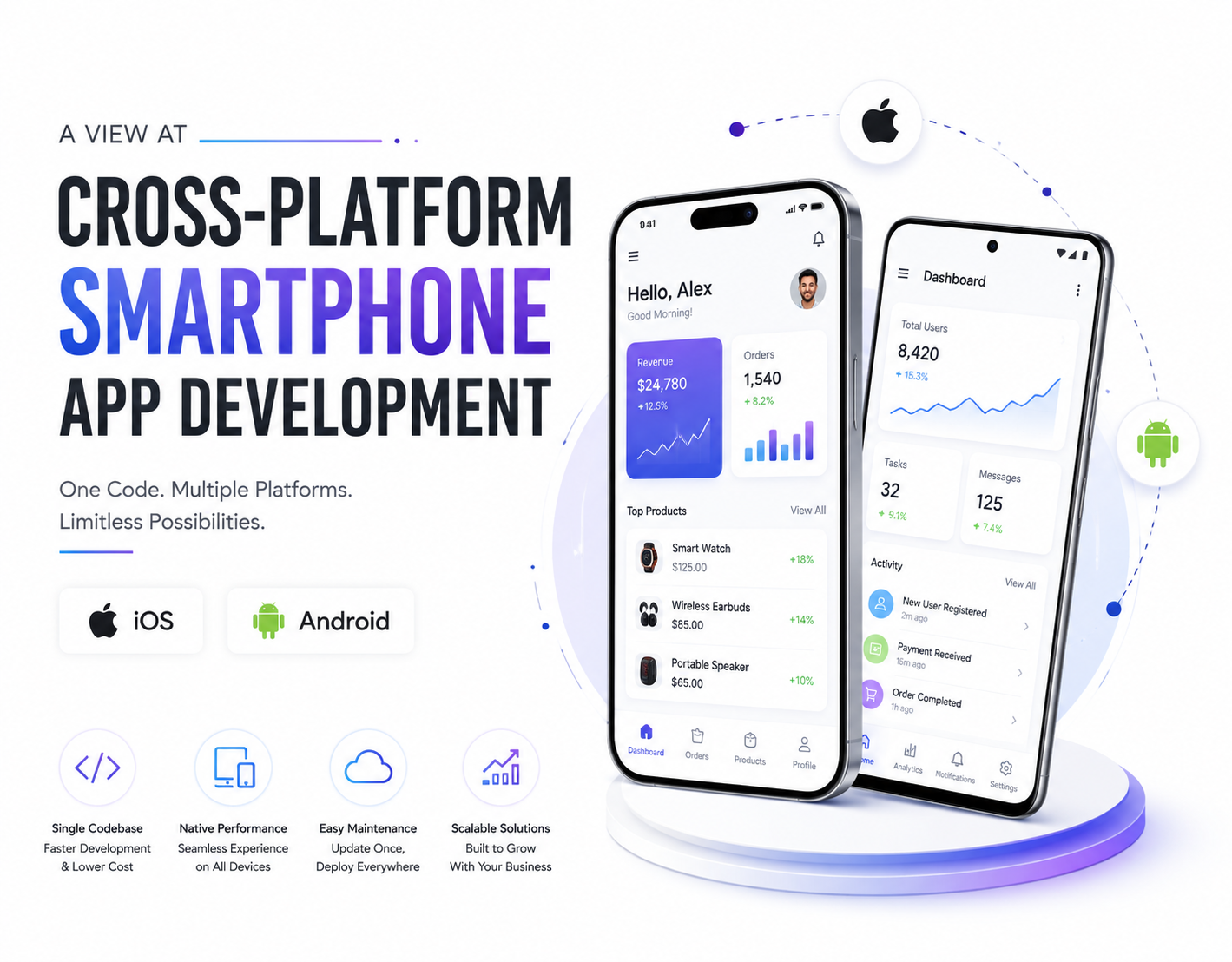
Frameworks and approaches such as React Native, Flutter and Kotlin Multiplatform can allow teams to share significant portions of application logic and development effort while still delivering strong platform experiences. Current 2026 industry analysis describes cross-platform development as a mature option for many standard consumer and enterprise applications rather than merely a low-cost compromise.
The right choice still depends on the product. A startup should consider the team's existing skills, the required integrations, expected performance, platform-specific requirements and long-term maintenance before selecting a framework.
For many startups, however, a shared development approach can shorten the path from idea to both major mobile platforms and allow the team to spend more of its budget on product quality rather than duplicating basic application functionality.
5. When Native Mobile Development Still Wins
The growth of cross-platform development does not mean native development has disappeared. Native remains the right choice for products that depend heavily on operating-system capabilities, specialized hardware or platform-specific performance.
Advanced camera processing, specialized sensors, certain Bluetooth integrations, secure hardware features, demanding graphics and other low-level capabilities can require direct access to iOS or Android APIs.
Native development can also make sense when the product experience is deeply tied to the conventions of a specific platform or when the business needs the highest possible control over performance and operating-system integration.
The important lesson for startups is to choose native because the product requires it, not because “native” automatically sounds more premium.
6. Where Progressive Web Apps Fit in 2026
Not every startup needs a downloadable application. Progressive Web Apps can provide an app-like experience through modern web technologies while retaining the reach and accessibility of the web.
A PWA can be particularly attractive for products where users arrive through search, social links, advertising or direct URLs. Content platforms, service businesses, e-commerce experiences and products that need both desktop and mobile access can benefit from a web-first approach.
PWAs also have an operational advantage: businesses can deploy changes through the web rather than maintaining separate installed app versions. However, native apps still have advantages for deep hardware integrations, certain store-based monetization models and experiences where app-store distribution is strategically important. citeturn0search0
The decision should therefore be based on customer behaviour and product requirements rather than treating PWA, native and cross-platform as competing technologies with one universal winner.
7. Performance, UX and Accessibility Are Part of the Product
A startup can have an innovative idea and still lose users if the application feels slow, confusing or difficult to use. Modern users have high expectations because they interact with fast digital products every day.
Performance should be considered throughout development. Images, network requests, API design, application state, caching and background processing can all affect the perceived speed of a mobile experience.
The interface also needs to be designed for real-world conditions. People may use the product with one hand, in bright sunlight, on unreliable connections or on devices with limited resources. Accessibility should be part of this thinking rather than a separate checklist at the end.
A small application that feels fast, clear and dependable can create more value than a larger application overloaded with features.
8. Privacy, Security and Trust Are Becoming Differentiators
AI-powered products make privacy and security even more important because applications may handle personal information, behavioural data, conversations and other sensitive context.
Businesses need to understand what data the application collects, why it is required, where it is processed and how long it is retained. The principle should be simple: collect what is necessary, protect it properly and communicate clearly with users.
The rise of on-device processing is partly relevant here because keeping certain workloads closer to the device can reduce the need to transmit sensitive information. Recent reporting on AI products highlights privacy, governance and human accountability as increasingly important considerations for AI-powered experiences. citeturn0news33turn0news34
For startups, trust is not only a compliance issue. It can become part of the product experience and the reason a customer chooses one service over another.
9. Mobile-First Does Not Mean Web-Last
One of the biggest mistakes would be interpreting mobile-first as a reason to ignore the web. In many cases, the strongest startup strategy combines a mobile product with a well-designed web presence.
An app is excellent for engagement and retention because it can provide a direct relationship with an existing user. A website can be better for discovery because people can find it through search engines, share links and access it without installing anything.
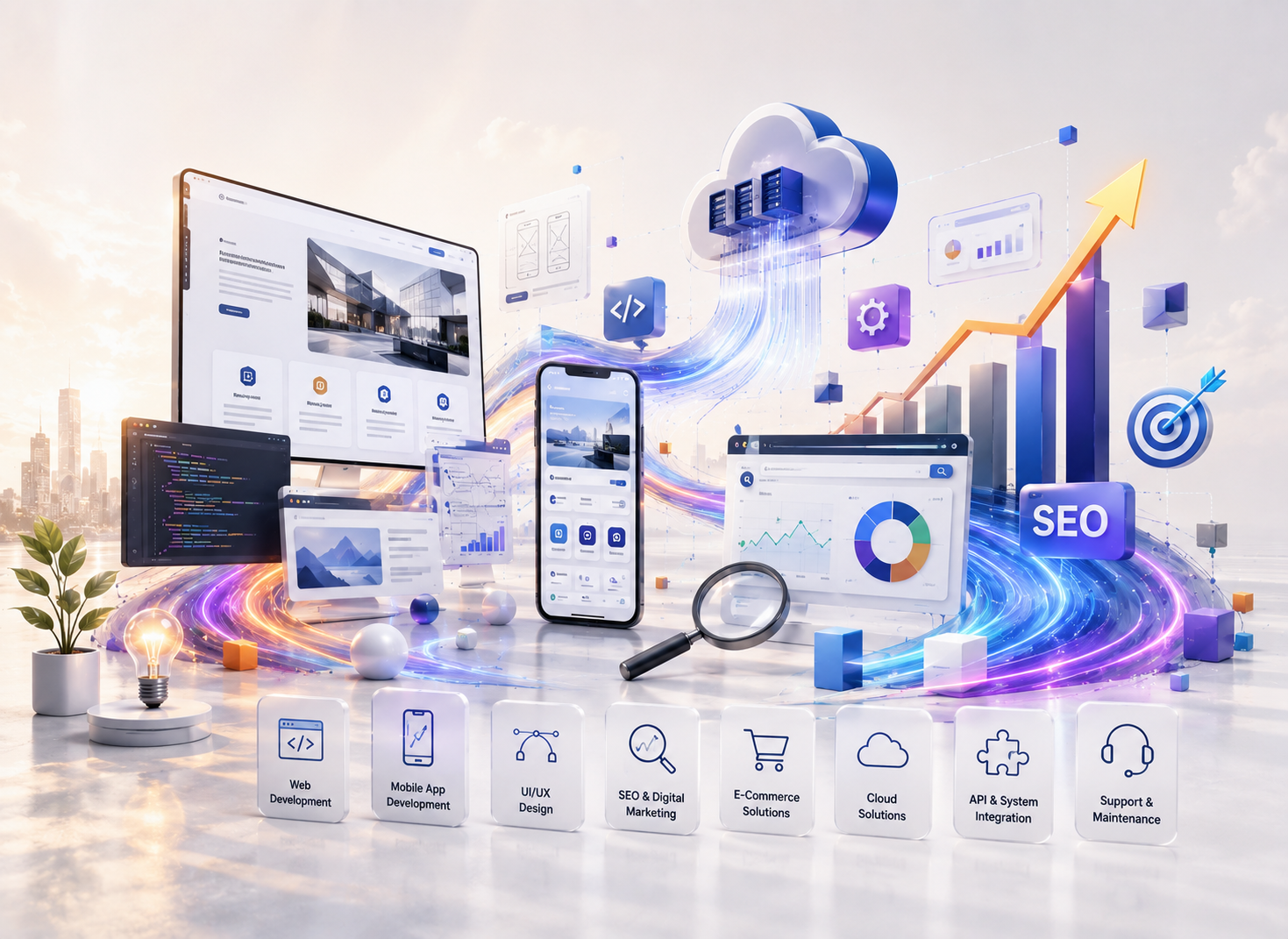
That is why startups should think of mobile and web as parts of one digital ecosystem. Professional web development can provide landing pages, service information, account experiences, documentation and other web functionality that supports the mobile product.
A strong web presence can also reduce dependence on app-store discovery. Someone searching for a solution does not necessarily know that your app exists yet. The website can introduce the brand, explain the value proposition and guide that visitor toward the right next step.
10. SEO Still Matters in a Mobile-First World
Mobile apps can create strong retention, but search engines remain one of the most important ways people discover businesses, products and solutions. A startup that launches an excellent app but has little searchable web content may miss users who are still researching their options.
This is where SEO becomes part of the broader product acquisition strategy. Search-friendly pages can answer questions, target relevant search intent, establish expertise and introduce potential customers to the business before they are ready to install an app.
The strongest approach is not to create duplicate content simply to rank. Build useful pages around the problems customers are trying to solve, then connect those pages naturally to the product or service.
For startups, this creates a useful combination: SEO helps bring new people into the ecosystem, while the mobile product can provide the deeper ongoing experience once they become users.
Mobile-First Decisions Start With the Product, Not the Technology
Before choosing a framework or deciding whether to build an app, answer these product questions.
01
Where Do Users Discover You?
If discovery happens primarily through Google and shared links, a strong web experience may need to come first.
02
What Makes Users Return?
If repeat usage, notifications, personalization or account-based workflows are central, a mobile application may provide greater value.
03
Does the Product Need Device Capabilities?
Camera, sensors, Bluetooth, biometrics and other platform features can influence whether native development is appropriate.
04
Where Does AI Actually Add Value?
Use AI where it improves the customer's outcome instead of adding an unnecessary chatbot or feature.
05
How Will the Product Grow?
Choose an architecture that can evolve with users, integrations and business requirements without creating unnecessary technical debt.
11. A Practical Startup Roadmap for 2026
The best mobile strategy is rarely about launching every possible feature on day one. A more sustainable approach is to build a clear progression from problem validation to a scalable digital ecosystem.
Start with the problem. Identify the customer problem and the specific outcome your product needs to deliver.
Define the smallest useful product. Select the features required to validate the idea instead of building every future feature immediately.
Choose the right platform strategy. Compare native, cross-platform and PWA approaches based on the actual product requirements.
Design the experience first. Map the key user journeys before implementation so that the technology supports the product instead of driving it.
Build measurement into the product. Analytics and feedback should help the team understand activation, engagement, retention and conversion.
Add AI intentionally. Identify workflows where AI can reduce friction, improve personalization or automate meaningful work.
Build the web ecosystem. Use a strong website, content strategy and SEO to support discovery and acquisition.
Scale after validation. Once real usage demonstrates what matters, invest more deeply in infrastructure, features, integrations and platform-specific capabilities.
What a Modern Startup Should Optimize For
The goal is not to follow every technology trend. It is to build a product that creates measurable value.
01
User Value
Every major feature should make the customer's experience more useful, faster or easier.
02
Speed to Learning
A startup should be able to release, measure and improve without unnecessary development cycles.
03
Scalable Architecture
The foundation should support growth while avoiding premature complexity.
04
Trust
Security, privacy, accessibility and reliability should be treated as product quality.
05
Discoverability
Mobile engagement and web-based acquisition should work together rather than compete with each other.
Frequently Asked Questions
Should a startup build a mobile app first in 2026?
Not automatically. Mobile-first makes sense when the core customer experience is naturally mobile. If customers primarily discover the business through search or need content before taking action, a strong website or PWA may be a better first step.
Is cross-platform development good enough for startups?
For many standard consumer and business applications, yes. Mature cross-platform approaches can reduce duplicated development effort while providing strong iOS and Android experiences. Native development remains preferable when the product depends heavily on platform-specific capabilities. citeturn0search0turn0search2
How is AI changing mobile app development?
AI is moving into the product experience itself through conversational interfaces, personalization, intelligent search, automation and on-device processing. The important consideration is whether AI solves a meaningful customer problem rather than simply adding an AI feature.
Does a mobile app replace a business website?
Usually not. Apps are excellent for engagement and repeat usage, while websites remain important for discovery, search visibility, content, sharing and customers who do not want to install an application.
Why is SEO still important for mobile apps?
SEO can introduce potential customers to the business before they become app users. Search-friendly web pages can answer questions, build trust and create an acquisition channel that complements the mobile product.
12. Final Thoughts
The original idea behind “small beginnings, big returns” is more relevant than ever. Startups do not need to build the largest digital platform on day one. They need to build the right experience for the people they want to serve.
In 2026, that experience may be a native application, a cross-platform app, a Progressive Web App, a website or a combination of all of them. AI adds another layer to the decision, creating new opportunities for personalization, automation and intent-driven experiences while also increasing the importance of privacy and responsible product design.
Cross-platform development has made it easier for many startups to reach multiple mobile platforms, while native development remains essential for specialized use cases. At the same time, the web remains critical for discovery, content and SEO.
The strongest strategy is therefore not “mobile versus web.” It is a connected digital ecosystem in which every channel has a clear job. Start focused, learn from real users, invest where the evidence is strongest and scale the technology as the business earns the right to scale.
BUILD YOUR NEXT DIGITAL PRODUCT
Have a mobile or web product idea?
From mobile-first product strategy and web development to SEO and scalable digital experiences, InSpring Design can help turn an early idea into a product built for growth.
Start a ProjectStart a Project→